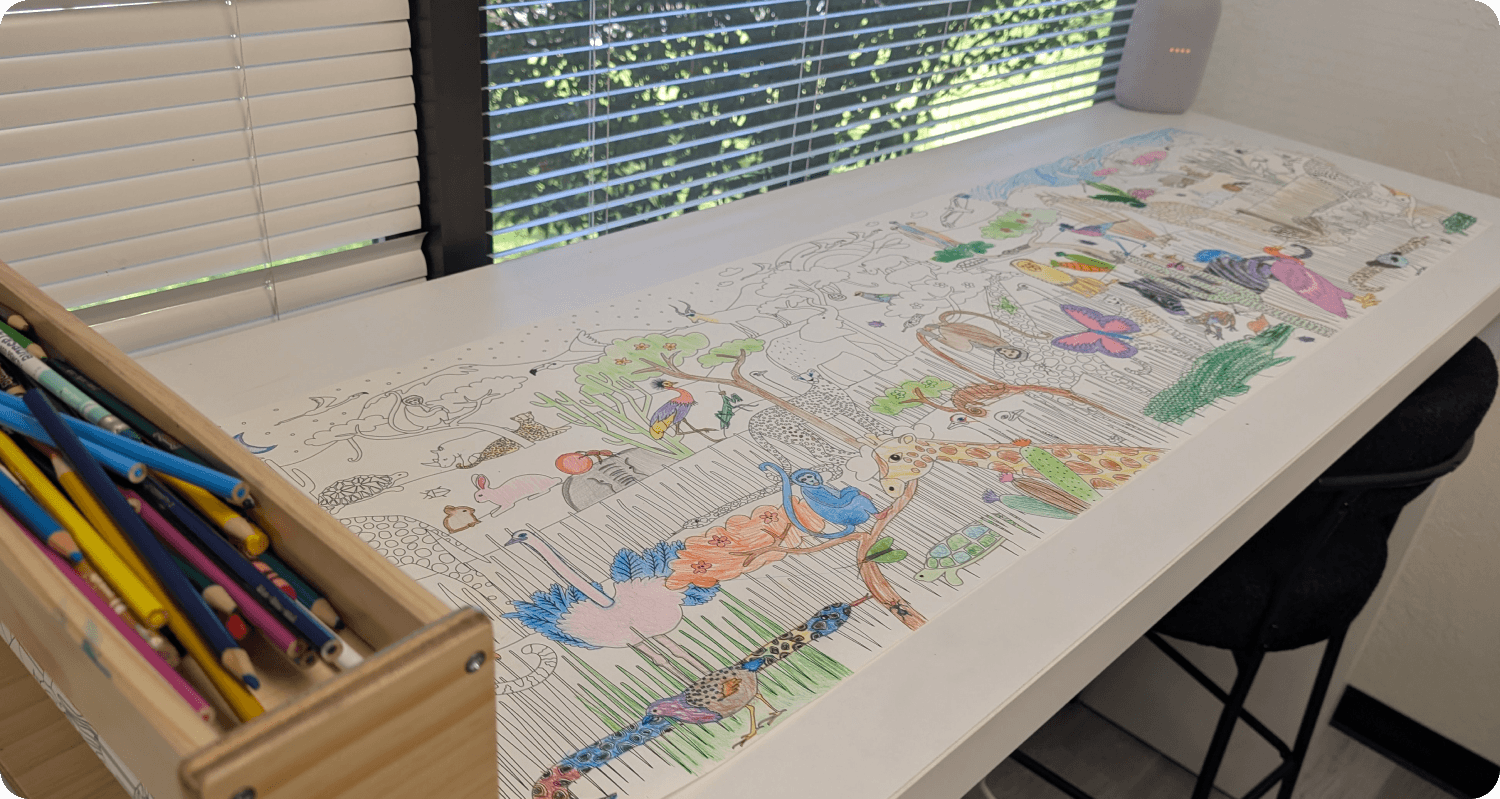
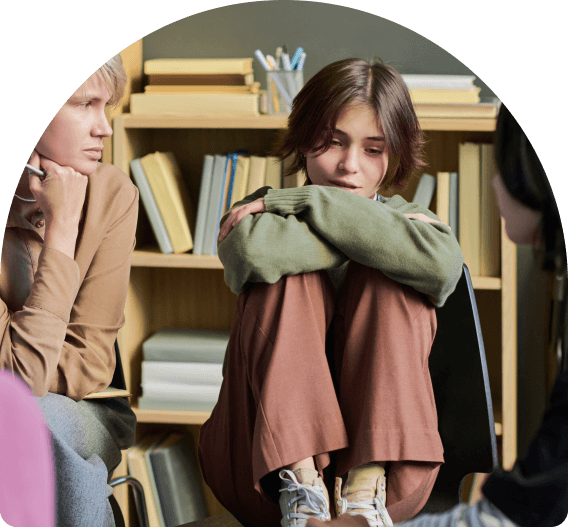
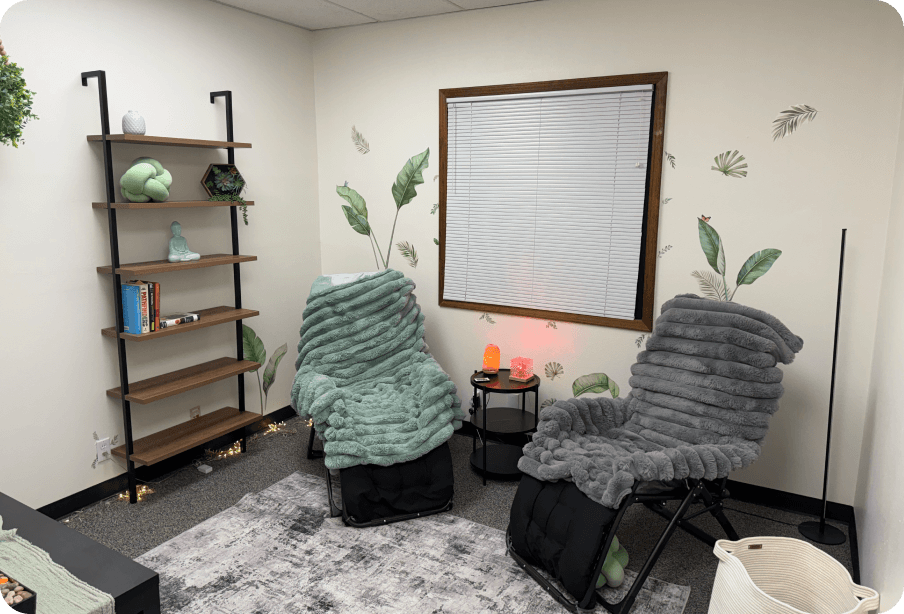
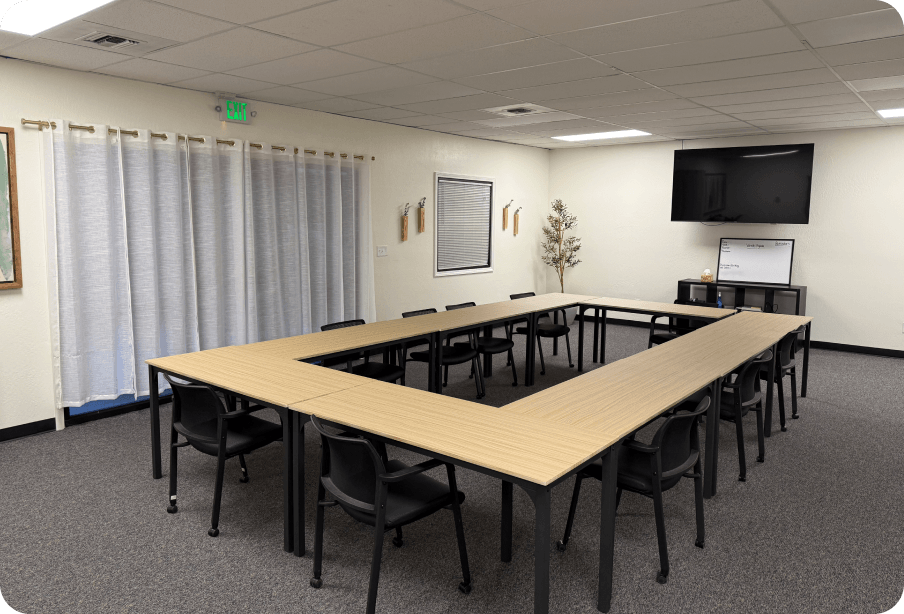
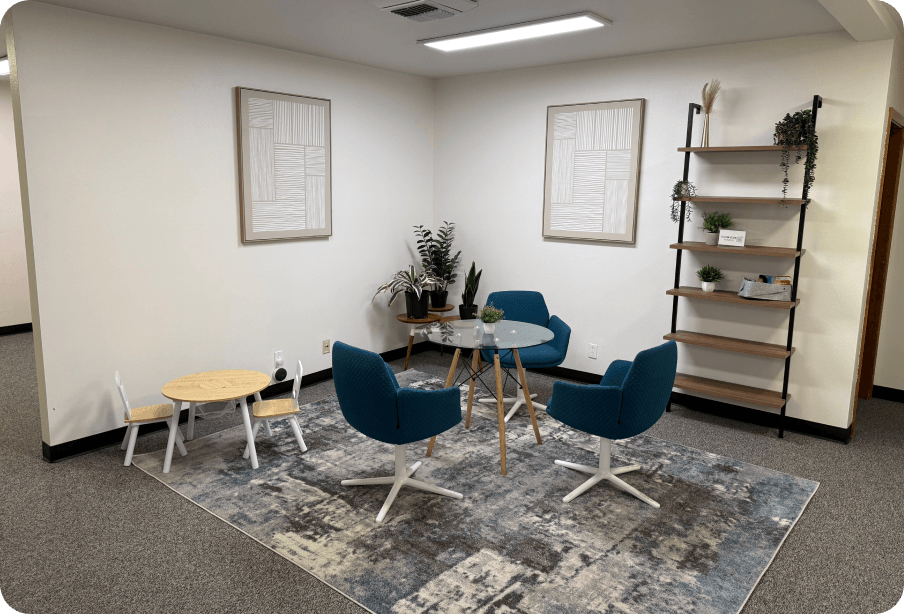
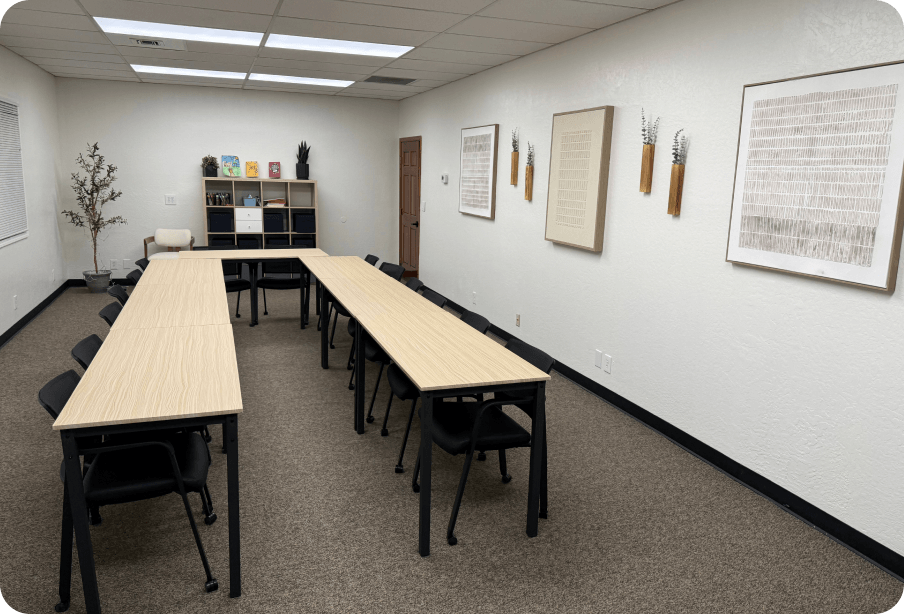
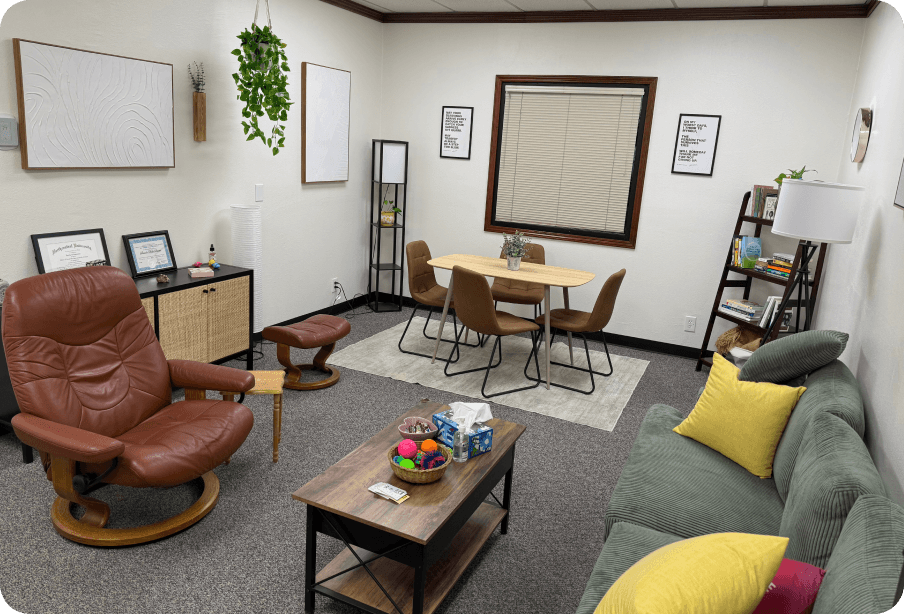
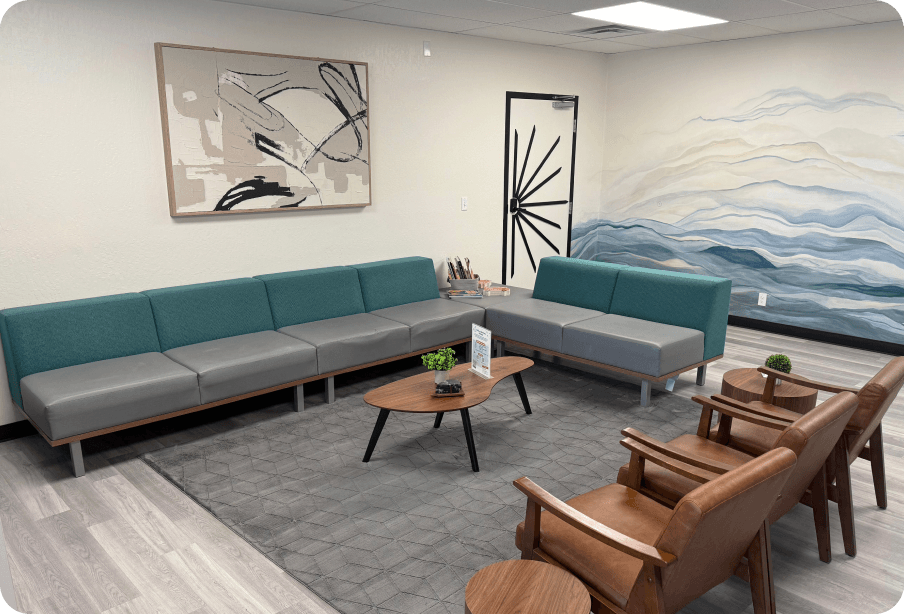
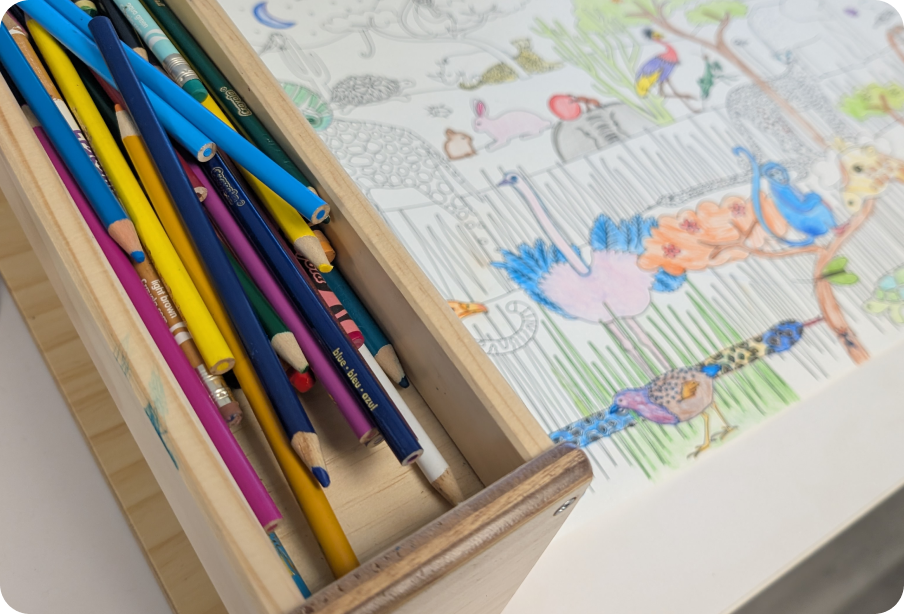
Every group brings together kids, teens, or adults working through something similar, so the support isn't just coming from one direction.
groups for kids
Starting around age 5
Playful and creative, these groups teach real coping skills, without ever feeling like a lesson.
Your child doesn't need to understand what "therapy" means for this to help. At 5, they just need a safe place to play and connect, picking up real skills without it ever feeling like a lesson.
If your child is shy, nervous, or has never done anything like this before, that's completely normal. Most kids settle in within the first couple of sessions, once they realize nobody's asking them to perform, explain themselves, or sit still and listen.
Five is the right age to start. Kids this young are already learning to share and notice feelings, and our groups build on that through play, in a small group, not a big overwhelming room.
That's expected. Our therapists are trained to bring quiet kids in gently, never by putting them on the spot.
What Happens
Hands-on activities
Games, art, and play, not worksheets or lectures. Kids learn best when they're busy having fun.
One hour, small group
Three or more kids, working through similar things together, small enough that everyone gets seen.
A consistent weekly rhythm
The same group, the same time, so it starts to feel familiar instead of new every week.
Skills that stick
Kids learn by doing, not by being told, and that's exactly how these skills are taught, through play.
Real peer connection
Realizing other kids feel this way too, often the most powerful part of the whole group.
Built-in confidence
Small wins, celebrated in the moment, alongside kids their own age who get it. That kind of encouragement, from peers, not just adults, means more.
groups for adolescence
Ages 9 to 14
Somewhere between kid and teenager, the rules change. What used to work, a hug, a talk, a distraction, suddenly doesn't land the same way. This is where that shift gets real support.
They'll hear it from a friend before they'll hear it from you
Preteens and young teens are wired to care what people their own age think more than what any adult tells them. That's exactly why group works so well here, hearing something from a peer lands differently than hearing it from a parent or therapist alone.
If you're worried your teen will just sit there and say nothing, that's a normal first-session reaction. Most ease into it once they see nobody's forcing them to share before they're ready.
Most start quiet, and that's expected.
Our therapists know how to make space without putting anyone on the spot.
Less than you'd expect. Most groups start with something low-pressure, a check-in, a simple activity, not a circle where everyone's expected to share their whole story on day one.
What Happens
Emotions explorers
A dedicated group for ages 9 to 14, meeting weekly in a small, consistent group, small enough that everyone actually gets seen.
Creative Expression
Art, writing, and hands-on activities instead of sitting in a circle talking, since most kids this age open up more through their hands than through conversation.
Real-time practice
Kids practice new skills together, in the moment, not just discussing them after the fact, so it's muscle memory by the time they need it.
Someone Who Gets Teens
Trained specifically in how teens actually communicate, not adult conversation scaled down to fit.
The Awesome Minds Club
Built specifically for neurodivergent and ADHD preteens, ages 9 to 14.
The Awesome Minds Club is a group built around the reality of being neurodivergent or ADHD at this age, not around fitting in, or being told to sit still and focus harder. It's a space where kids can just be themselves.
Sessions run one hour, with small groups of peers who process the world in similar ways. No explaining, no masking, just genuine connection and practical skills that carry into school, home, and friendships.
Real, guided practice with social skills, in a low-pressure group setting where getting it wrong is part of learning, not something to be embarrassed about.
Understanding big emotions
Learning to recognize and manage emotional reactions before they take over, with tools that actually make sense for how their brain works.
Peer connection
Time with other kids who process the world similarly, without needing to explain themselves first, often the most powerful part of the whole group.
coming soon
A behavioral challenges group for Teens
groups for adults
Ongoing, weekly support
Ongoing groups built for the everyday moments, not just the hard ones.
You've been managing this alone for a while now
Adult life doesn't slow down to let you catch your breath, and most people carry more than they let on. Group gives you a regular space to actually put some of it down, with people who aren't going to be surprised by any of it.
This isn't a one-time workshop or a quick fix. It's ongoing, weekly support you can actually rely on, the same group, the same time, week after week, so you're never starting over.
What to Expect
Guided discussion
Real conversation, structured around mindfulness and practical coping skills, not just an open floor with no direction.
One hour, consistent group
The same group of people, working on similar things, week to week, so trust has room to actually build.
You're Not the Only One
Hearing your exact experience from someone else in the room changes things in a way individual sessions alone can't quite replicate.
Skills You Actually Use
Tools built for everyday moments, not just the therapy room, things you can actually reach for mid-week.
A Space That Doesn't Judge
Everyone in the room is carrying something too. Nobody's there to have it all figured out.
Consistency That Builds Over Time
Progress here isn't about one breakthrough session, it's what adds up from showing up, again and again.
Will I have to share personal things with strangers?
Only what you're comfortable sharing, at your own pace. Nobody is required to open up before they're ready, and groups are built to feel safe over time, not to pressure anyone into more than they want to say.
What if I feel uncomfortable with someone in my group?
Let your facilitator know. Group dynamics matter, and we'll work with you to address it, whether that means adjusting the group or finding a different one that's a better fit.
Isn't individual therapy more effective than group?
Not necessarily, they're different tools for different things. Group therapy adds something individual sessions can't, hearing your exact experience reflected back by someone else in the room, and many people find real progress happens faster that way.
Can I switch groups if it's not the right fit?
Yes. If a group doesn't feel right after giving it a fair shot, tell us and we'll help match you with a better one.
What happens if I miss a session?
Just let us know ahead of time if you can. Groups run on a consistent schedule, so missing one session doesn't mean starting over, you can pick back up the following week.
How long do groups run, weeks or ongoing?
It depends on the group. Some run for a set number of weeks focused on a specific skill or topic, others are ongoing and ideal for consistent, longer-term support. We'll let you know which applies when you're matched.