EMDR (Eye Movement Desensitization and Reprocessing) helps your brain reprocess memories that still feel stuck,
so they stop carrying the same weight. It's a different path to the same goal: feeling like yourself again.
EMDR was built for exactly the kind of stuck feeling that's hard to explain out loud.
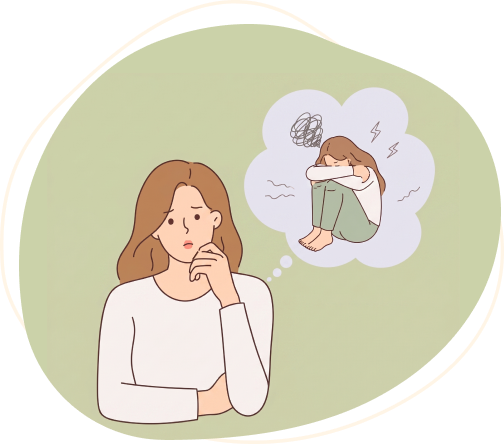
A memory that won't stay in the past
It shows up like it's happening now, not like something that already happened.
Anxiety or panic that shows up unannounced
Your body reacts before your mind knows why.
A heaviness that hasn't lifted
Grief, low mood, or a sadness that's overstayed its welcome.
A specific fear that won't loosen its grip
The kind of fear that doesn't listen to reason, no matter how hard you've tried.
Something from childhood, still shaping today
Old enough that it feels like it shouldn't still matter. It still does.
A feeling that you're not enough
And you can't always trace back exactly where that started.
EMDR started as a treatment for trauma and PTSD, and that's still what it's most studied for. But the research has grown well past that.
Today it's also used effectively for grief, performance anxiety, and specific phobias, anywhere a stuck memory or belief is what's keeping the symptoms alive.
How EMDR Works
Your brain, doing what it already knows how to do
During EMDR, your therapist guides you through recalling a distressing memory while using bilateral stimulation, eye movements, tapping, or sound, back and forth between the left and right side. It sounds unusual, but the goal is simple: help your brain finish processing something it got stuck on, so the memory stops feeling so overwhelming.
During EMDR, your therapist guides you through recalling a distressing memory while using bilateral stimulation, eye movements, tapping, or sound, back and forth between the left and right side.
Talk first
Your therapist gets to know your story
and figures out what to focus on. No diving
into the hard stuff yet.
Process, gently
Guided eye movements or tapping while you
hold the memory in mind, at your pace, fully
in control the whole time.
Land somewhere calm
Every session ends with you feeling
settled, whether or not the processing is
finished for the day.
Candice works with children, teens, and young adults moving through anxiety, depression, trauma, and life's harder transitions. Her approach blends practical, skills-based therapy, CBT and DBT, with play-based work for younger clients, and includes EMDR specifically for trauma.
She meets each person where they are, honoring their story, their family, and their background, rather than applying a one-size-fits-all plan. Whether it's a recent change or something longer-standing, she's someone you can walk through it with.
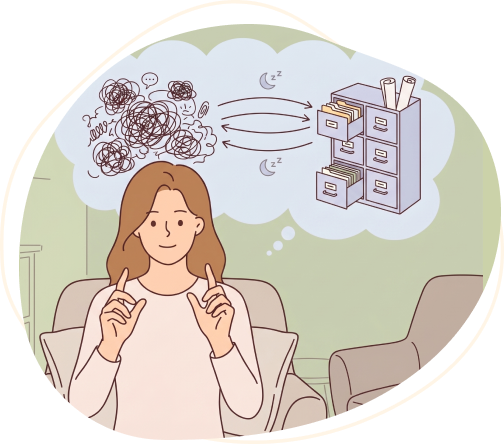
When something is too overwhelming to process in the moment, your brain can store it differently, still raw, still carrying the original emotions and physical reactions. That's why something from years ago can still feel like it's happening right now.
What the eye movements actually do
The back-and-forth movement is thought to work a lot like REM sleep, the stage where your brain naturally files memories away. While you hold the memory in mind, the movement helps your brain finish that filing process, so it can finally settle into the past where it belongs.
What the research shows
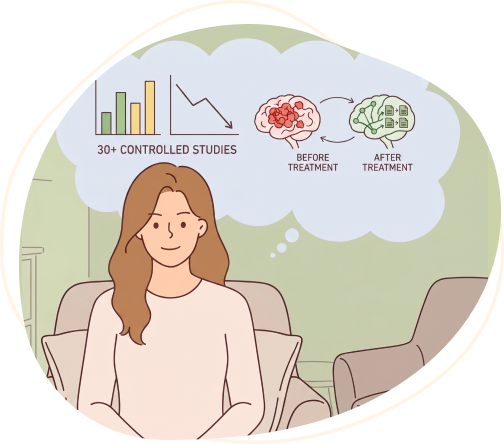
More than 30 controlled studies back this up, often showing real relief in fewer sessions than traditional talk therapy. It's recognized by the World Health Organization, the American Psychiatric Association, and the U.S. Department of Veterans Affairs. Brain imaging has even shown measurable changes in how these memories are stored after treatment.
questions about EMDR
A few things people usually ask
How many sessions will I need?
It depends on what you're working through. A single difficult event may take fewer sessions than something layered over years, like childhood experiences. Your therapist will give you a better sense after your first visit.
What if I can't clearly remember what happened?
That's okay. You don't need a full, detailed memory for EMDR to work, a feeling, an image, or even just a physical sensation is often enough to start with. Your brain doesn't need the complete story to begin processing it.
Are there side effects?
It's common to feel a little tired, foggy, or emotionally raw after a session, and sometimes new thoughts or memories surface over the next few days. That's a normal part of your brain continuing to process, not a sign something's gone wrong, and it typically settles within a day or two.
Can I do EMDR while taking medication?
Yes. EMDR and medication often work well together, and for some people, medication makes it easier to engage in the processing itself. There's no need to stop or adjust anything before starting.
What if a session feels like too much?
You're never pushed past what you can handle. Before any processing begins, your therapist teaches you grounding techniques you can use if things feel like too much, and every session ends in a way that leaves you settled, not raw. You're in control of the pace the whole way through.
Is EMDR available online?
Yes. It works well over video too, using the same guided approach, just from wherever feels safest for you.